Roasted Salmon and Broccoli Rice Bowls

By Maya Hart
⬇️ Jump to Recipe
🥄 Prep: 15 mins 🔥 Cook: 15 mins ⏱️ Total: 30 mins 🍽️ Yield: 4 Servings ⚡ 443 cal

Summary: During my second pregnancy, I craved bold, spicy food in a way I never had before. But I also needed meals that were high in protein, rich in omega-3s, and quick enough to pull together on a weeknight when my energy was fading. These roasted salmon and broccoli rice bowls, glazed with a sweet-spicy gochujang mayo and served over nutty brown rice with tangy kimchi, became my answer. Everything roasts on one sheet pan, the salmon stays incredibly tender, and the whole dish comes together in half an hour. It is anti-inflammatory, high in protein, and full of the flavors I craved, all while being completely pregnancy-safe when made with a few simple considerations.

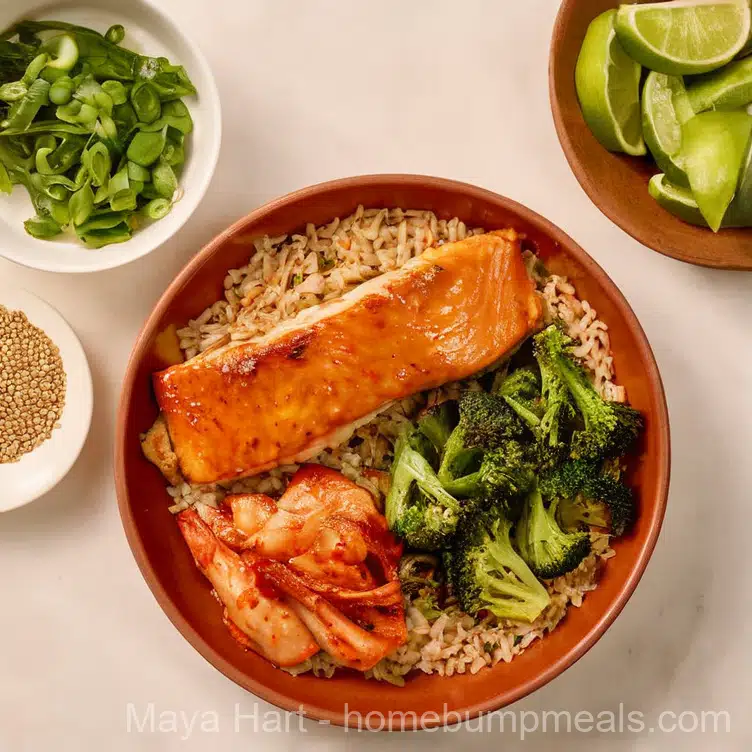
Roasted Salmon and Broccoli Rice Bowls recipe image

I never expected to be the pregnant woman craving kimchi and gochujang. Before my second pregnancy, my go-to comfort foods were fairly mild: buttered toast, chicken soup, maybe a little black pepper if I was feeling wild. But around 20 weeks, something switched. I wanted heat. I wanted tang. I wanted the funky, fermented bite of kimchi and the deep, savory sweetness of Korean chili paste. I dreamed about it. And I was also acutely aware that I needed to eat salmon at least twice a week for the omega-3s, that broccoli was packed with folate and fiber, and that brown rice would keep my blood sugar steadier than white rice. So I started playing in the kitchen, and after a few tweaks, these roasted salmon and broccoli rice bowls were born.

This dish has become a weeknight staple in our house. My toddler eats the salmon and rice (she calls it “pink chicken”), my husband asks for extra kimchi, and I feel genuinely nourished after eating it. It is one of those rare meals that feels both indulgent and deeply healthy. The salmon gets coated in a quick glaze of mayonnaise, gochujang, and honey, then roasts alongside crisp-tender broccoli until the glaze is caramelized and the fish flakes apart with a fork. Piled over warm brown rice and topped with crunchy scallions, sesame seeds, and a heap of tangy kimchi, it’s a bowl that hits every note: sweet, spicy, savory, funky, fresh. And it takes 30 minutes, start to finish. That is my kind of dinner.

Why Salmon and Broccoli Became My Pregnancy Power Couple

During pregnancy, there is a short list of foods that feel like a direct deposit into your baby’s development. Salmon is near the top. It is one of the best sources of DHA, a type of omega-3 fatty acid that supports fetal brain and eye development. The American College of Obstetricians and Gynecologists recommends that pregnant and breastfeeding women eat two to three servings of low-mercury fish per week, and salmon is one of the safest choices. It is also rich in protein, B vitamins, and selenium. I tried to eat it regularly, but plain baked salmon got boring fast. This gochujang glaze was my solution, a way to make salmon something I actively craved rather than something I ate out of obligation.

Broccoli is another nutritional heavyweight. It provides folate, which is critical for preventing neural tube defects in early pregnancy. It also supplies fiber, vitamin C, vitamin K, and a host of antioxidants. Roasting it on the same sheet pan as the salmon means it soaks up some of the glaze drippings, getting slightly caramelized and deeply flavorful. And brown rice, with its fiber and complex carbohydrates, helps keep blood sugar stable and digestion moving. The dietitian who consults on HomeBumpMeals looked over this recipe and gave it an enthusiastic thumbs up. She noted that the combination of protein, healthy fats, fiber, and fermented vegetables makes it a beautifully balanced meal for the childbearing year.

Let Us Talk About Gochujang and Kimchi During Pregnancy

I know that when you are pregnant, every ingredient that feels unfamiliar can trigger a wave of anxiety. I felt that way about gochujang and kimchi at first. Let me share what I learned. Gochujang is a Korean fermented chili paste made from red chili powder, glutinous rice, fermented soybeans, and salt. It is safe during pregnancy. It is cooked as part of the glaze here, which adds an extra layer of safety, but even raw gochujang in moderation is considered fine. It is spicy, so if you are dealing with heartburn, you might want to use a little less, but for me, the flavor was exactly what I wanted.

Kimchi is a fermented vegetable dish, usually made with napa cabbage, radishes, garlic, ginger, and chili. Fermented foods can be a gray area during pregnancy because they are often unpasteurized. However, commercially produced kimchi that is sold in sealed jars at the grocery store is typically pasteurized or has been fermented in a controlled way that makes it safe. The key is to buy it from a reputable source and keep it refrigerated. If you are making your own kimchi at home, you may want to be more cautious and discuss it with your provider. I bought pasteurized kimchi from my local grocery store and ate it without worry. The probiotic benefits of fermented foods can actually support gut health, which is a plus during pregnancy when digestion often slows down. A quarter cup on top of these bowls adds a tangy, crunchy, probiotic punch that I genuinely missed on days I skipped it.

The Simple Ingredients That Build These Bowls

This recipe is built on a handful of ingredients that you can find at most grocery stores. Here is what you need and why each piece matters.

  • Skinless salmon fillets: I use skinless for convenience, but you can leave the skin on if you prefer. The glaze will caramelize on the top and sides. Look for wild-caught salmon if it fits your budget, but responsibly farmed salmon is also a great choice and is often higher in omega-3s. Both are safe during pregnancy.
  • Mayonnaise: Use a full-fat mayonnaise made from pasteurized eggs. Almost all commercial mayo is pasteurized and safe during pregnancy. It helps the glaze cling to the salmon and adds richness.
  • Gochujang: This Korean chili paste is available in the international aisle of many supermarkets or at Asian grocery stores. It is thick, deep red, and wonderfully savory-sweet-spicy. A tablespoon gives the salmon a gorgeous color and a gentle heat.
  • Honey: Just a teaspoon balances the spice and helps the glaze caramelize in the oven. It also makes the salmon shiny and beautiful. Pasteurized honey is safe during pregnancy.
  • Broccoli: Cut into bite-sized florets so they roast in the same time as the salmon. They get lightly charred and tender.
  • Extra-virgin olive oil: For tossing the broccoli before roasting. It helps the florets crisp up without burning.
  • Brown rice: I cook a batch of brown rice at the start of the week and keep it in the fridge. Warm it up and it becomes the chewy, nutty base of these bowls. You can also use quinoa, farro, or even cauliflower rice if you are watching your carbohydrates more closely.
  • Kimchi: Store-bought, pasteurized kimchi adds a tangy, spicy, probiotic-rich crunch. If you are sensitive to spice, look for a mild or white kimchi.
  • Scallions and toasted sesame seeds: For freshness and a little crunch on top. They make the bowls look beautiful and add a final layer of flavor.
  • Lime wedges (optional): A squeeze of fresh lime juice right before eating brightens the whole bowl. I almost never skip it.

How to Make These Bowls in Half an Hour

This recipe is all about efficiency. You line a sheet pan with foil, which makes cleanup a breeze. You use one bowl for the glaze, and you cook the salmon and broccoli together on the same pan. The only other thing you need is cooked brown rice, which you can make ahead or start before you prep the rest. Here is the flow that I follow on a typical weeknight.

  1. Preheat and prep the pan. Set your oven to 400°F. Line a large rimmed baking sheet with foil for easy cleanup. Arrange the salmon fillets on one side of the pan and season them lightly with salt and pepper.
  2. Make the glaze. In a small bowl, whisk together the mayonnaise, gochujang, and honey until smooth. It will be a pale orange-pink color and smell incredible. Brush it generously over the tops and sides of the salmon fillets, using all of it.
  3. Toss the broccoli. On the other side of the baking sheet, add the broccoli florets. Drizzle with olive oil and sprinkle with the remaining salt and pepper. Toss with your hands to coat, then spread them in a single layer.
  4. Roast. Slide the pan into the oven and roast for 14 to 16 minutes. The salmon is done when an instant-read thermometer inserted into the thickest part reads 145°F, or when the fish flakes easily with a fork. The broccoli should be tender with lightly charred edges.
  5. Assemble the bowls. Divide the warm brown rice among four shallow bowls. Place a salmon fillet on top of each mound of rice. Add a generous scoop of roasted broccoli and a quarter cup of kimchi. Scatter scallions and sesame seeds over the top. Serve with lime wedges for squeezing.

That is it. From start to finish, about 30 minutes. I have made this while my toddler sat on the counter “helping” me whisk the glaze, and I have made it while bouncing a baby on my hip. It is forgiving and fast, and the cleanup is minimal.

Little Tweaks and Variations I Have Tried

  • Different protein: If you are not in the mood for salmon, this glaze is wonderful on chicken thighs or firm tofu. Adjust the roasting time accordingly; chicken will take longer, tofu about the same.
  • Different vegetables: Asparagus, green beans, cauliflower, or Brussels sprouts all roast beautifully alongside the salmon. Just cut them into uniform pieces so they cook in time.
  • Extra sauce: I sometimes double the glaze and reserve a little to drizzle over the finished bowls. It adds an extra punch of flavor.
  • Lower spice: If you are sensitive to heat, reduce the gochujang to half a tablespoon and use a mild kimchi. The bowls will still be flavorful without making your mouth burn.
  • Meal prep version: Portion the cooked rice, roasted salmon, and broccoli into individual containers. Store the kimchi separately. Reheat the salmon and broccoli gently in the microwave, then top with cold kimchi right before eating. The salmon is still delicious the next day.

Leftovers and Storage

These bowls keep well in the refrigerator for up to three days. I store the components separately: rice in one container, salmon and broccoli in another, and kimchi in its own jar. When I am ready to eat, I reheat the rice, salmon, and broccoli together in the microwave until warm, then top with the cold kimchi, scallions, and sesame seeds. The salmon will be slightly less moist than when freshly roasted, but the glaze keeps it flavorful. I do not recommend freezing this dish; the texture of the salmon and broccoli suffers when thawed.

Why This Meal Earned a Spot in My Postpartum Meal Train

After both my babies were born, I received a few meal train deliveries that were heavy casseroles and pasta bakes. They were delicious, but I often craved something lighter, something that felt vibrant and fresh. One friend brought me a version of these salmon rice bowls, and it was like a beam of sunlight in my tired, postpartum haze. The spicy glaze woke up my senses, the salmon felt restorative, and the kimchi helped my digestion when things were sluggish. It was the meal that made me feel most like myself again.

Since then, I have brought these bowls to countless new moms. I deliver the components in separate containers with a little note about how to assemble them. The mom can eat them hot or cold, depending on her baby’s mood. I often pair it with a bag of my Easy Homemade Hummus and some cut vegetables for snacking, and a jar of my Homemade Fresh Ginger Tea for warmth. For more ideas like this, I have a whole list of nourishing, practical meals in my Postpartum Meal Train Ideas post.

Maya’s Mom Confession: The Dinner That Made Me Feel Like a Person Again

There is a particular evening I remember so clearly. I was about six weeks postpartum with my second baby. I was exhausted, my body still felt foreign, and I had been surviving on granola bars and cold toast for days. My husband took both kids for a walk, and I had 45 minutes of silence. I preheated the oven, whisked the glaze, and brushed it onto a salmon fillet. I tossed broccoli with oil and salt, and I slid the pan into the oven. While it roasted, I stood in the quiet kitchen, drinking a glass of cold water, watching the light change outside. When the timer beeped, I assembled a bowl and sat at the table alone. The salmon was spicy and caramelized, the broccoli was crisp, the rice was warm, and the kimchi was tangy and bright. I ate slowly, with a fork, not standing over the sink. For the first time in weeks, I felt like myself. That bowl gave me more than nutrition. It gave me a moment of peace.

If you are pregnant, nursing, or just trying to get a delicious, healthy dinner on the table, I hope you make these bowls. They are fast, flavorful, and packed with the nutrients your body needs. And they might just give you a quiet moment you did not know you needed.

The full recipe card with exact measurements and step-by-step instructions is right below. Go preheat your oven, and let us make something wonderful.

Roasted Salmon and Broccoli Rice Bowls recipe image

Roasted Salmon and Broccoli Rice Bowls

🥄 Prep: 15 mins 🔥 Cook: 15 mins ⏱️ Total: 30 mins 🍽️ Yield: 4 Servings ⚡ 443 cal

🥫 Ingredients

4 (5-ounce) skinless salmon fillets
½ teaspoon salt, divided
⅛ teaspoon ground pepper plus ¼ teaspoon, divided
1½ tablespoons mayonnaise
1 tablespoon gochujang
1 teaspoon honey
3 cups broccoli florets, cut into 1-inch pieces
1 tablespoon extra-virgin olive oil
2 cups hot cooked brown rice, divided
1 cup kimchi
¼ cup sliced scallions
1 tablespoon toasted sesame seeds
Lime wedges for serving (optional)

📝 Instructions

  1. Preheat oven to 400°F. Line a large rimmed baking sheet with foil.
  2. Place the salmon fillets on one side of the prepared baking sheet. Sprinkle evenly with ¼ teaspoon salt and ⅛ teaspoon pepper. In a small bowl, whisk together the mayonnaise, gochujang, and honey until smooth. Brush the glaze evenly over the tops and sides of each fillet.
  3. On the other side of the baking sheet, toss the broccoli florets with the olive oil and the remaining ¼ teaspoon salt and ¼ teaspoon pepper. Spread in a single layer.
  4. Roast until the salmon reaches an internal temperature of 145°F and flakes easily with a fork, about 14 to 16 minutes. The broccoli should be tender with lightly charred edges.
  5. To assemble, place ½ cup warm brown rice in each of four shallow bowls. Top each with a salmon fillet, about ⅓ cup roasted broccoli, and ¼ cup kimchi. Scatter scallions and sesame seeds over the top. Serve with lime wedges, if desired.

🔬 Nutrition Facts

Calories: 443 | Fat: 18g | Saturated Fat: 3g | Cholesterol: 77mg | Carbohydrates: 34g | Total Sugars: 4g (Added Sugars: 1g) | Protein: 36g | Fiber: 4g | Sodium: 688mg | Potassium: 825mg
Medical Disclaimer: This content is for informational purposes only and does not replace professional medical advice, diagnosis, or treatment. Always consult your OB-GYN, midwife, or a registered dietitian for personalized guidance tailored to your health history. I am a mom who figured this out the hard way, not your doctor!🔬 Researched using established prenatal nutrition guidelines
Maya Hart

About the author – Maya Hart

I’m a mom of two, prenatal nutrition enthusiast, and the founder of HomeBumpMeals. After a surprise gestational diabetes diagnosis, I turned my tiny kitchen into a test lab for easy, nourishing meals. Every recipe is RD‑reviewed and tested in the chaos of real life.

🎓 Prenatal Nutrition Certified 🩺 RD‑Consulted Recipes 📸 Real Kitchen Photos Only
Read Maya’s full story →

💬 Share your thoughts

Your email address will not be published. Required fields are marked *