The Black Tea Bag Illusion
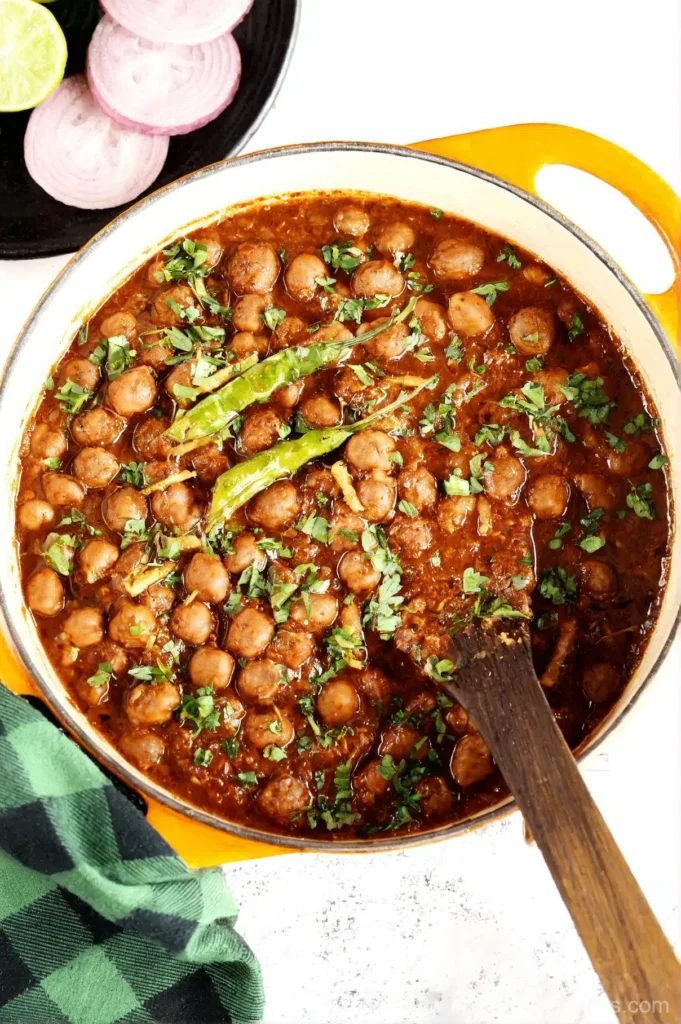
When you first read the ingredient list and see “1 black tea bag,” you might think I have completely lost my mind. Why on earth are we putting a standard black tea bag into our chickpeas? Are we making breakfast or are we making a very confused beverage? But hear me out. This is the exact secret that Indian restaurants use to get that gorgeous, deep, dark brown color in their chole. The tannins in the tea also add a tiny bit of earthy astringency that perfectly balances the rich, heavy tomato gravy. Just throw the tea bag in the pressure cooker with the chickpeas, let it do its magic, and fish it out before you mash anything. It is the cheapest culinary trick in the book, and it works every single time.
The Blood Sugar Reality Check
We need to look at the nutrition label together, because chickpeas are a beautiful but tricky gray area. At 31 grams of carbohydrates and only 7 grams of protein, this is definitely a carb-forward dish. When I was navigating my gestational diabetes, I used to be terrified of legumes because they always seemed to spike my monitor an hour later.
But then I looked closer at the fiber. There are 8 grams of fiber in this serving. That is an absolute mountain of fiber. It acts like a massive net in your digestive system, slowing down the absorption of those carbs. But 7 grams of protein is not quite enough to anchor this as a standalone meal. You absolutely must pair this with a serious protein to keep your blood sugar completely flat.
Here is my non-negotiable rule. You do not eat chole without raita. Mix a cup of full-fat plain Greek yogurt with a little grated cucumber, salt, and roasted cumin. The heavy protein and fat from the yogurt completely buffer the chickpea carbs. You get all the comforting, spicy warmth of the curry without the inevitable glucose crash.
The Restaurant Secrets
The recipe calls for two specific ingredients that are the absolute difference between a “pretty good homemade curry” and “tastes exactly like my favorite takeout.” The first is amchur powder, which is dried mango powder. It gives the curry that bright, fruity tang that you just cannot get from lemon juice or tomatoes alone. The second is kasuri methi, those dried fenugreek leaves. When you crush them between your palms and stir them in at the very end, they release this deep, slightly bitter, maple-like aroma that makes your kitchen smell like a luxury spice market.
The Toddler Translation
Let us be brutally honest about toddlers and chickpeas. Whole chickpeas are round, they are slippery, and they roll away from the spoon. My three year old currently believes that anything round is a projectile, and he will happily launch them across the kitchen. Plus, they can be a choking hazard for the little ones.
Here is my ultimate hack. When the curry is done simmering, take a potato masher or the back of your spoon and mash about half of the chickpeas right in the pot. It instantly thickens the gravy, makes it incredibly creamy, and turns the rest of the chickpeas into a soft, cohesive “chickpea mush.” Serve it over a soft piece of naan, and my toddler eats it happily because he thinks he is just eating “brown sauce.” Toddler logic makes zero sense, but I will take the win.
The Sizzling Finale
The final step is the tadka, the tempering. You heat a little ghee, fry some green chilies and ginger, and finish it with a pinch of hing (asafoetida). When you pour that sizzling, fragrant ghee over the finished curry, it will literally hiss and pop. The smell of the hing hitting the hot fat is intoxicating. It wakes up all the spices and ties the whole dish together.
Serve it hot with a massive dollop of that cucumber raita and a sprinkle of fresh cilantro. You just made a rich, authentic, deeply comforting meal in forty-five minutes. Grab a bowl, take a deep breath of that incredible aroma, and enjoy the fact that you pulled it off. You are doing an incredible job, mama.