Look, I remember staring at a sushi menu when I was pregnant with my first. I was 28 weeks, dealing with gestational diabetes, and all I wanted was a spicy tuna roll. The combination of savory fish, creamy avocado, and tangy rice just hits the spot perfectly. But the moment I saw the menu, the inevitable panic set in. You start Googling and suddenly you are convinced you can never eat Japanese food again.
So, let me answer the big question right out of the gate. Can I eat sushi while pregnant?
The short answer is yes, but with strict modifications. You do not have to give up sushi entirely. You just need to give up raw fish. Understanding the difference between safe and unsafe options requires looking past the myths and diving into the actual science of food safety. Here is your comprehensive, medically backed guide to navigating the menu safely without losing your mind.
The Short Answer: The Truth About Sushi
To really answer can pregnant women eat sushi, we first need to define what sushi actually is.
In Japanese cuisine, the word sushi refers specifically to the vinegared rice, not the fish. Sashimi is the term for raw fish served without rice. Therefore, from a culinary standpoint, sushi does not have to be raw.
The medical consensus is clear. Can you eat sushi when pregnant? Yes, as long as the fish and seafood used are fully cooked and low in mercury, and the vegetables are properly washed.
However, raw fish and raw shellfish must be strictly avoided until after your baby is born.
Why is Raw Sushi a Concern During Pregnancy?
You might be wondering why can’t pregnant women eat sushi if it is just fish and rice? To understand the restrictions, we have to look at how pregnancy alters your body. It is not just about you getting an upset stomach. It is about protecting the developing fetus.
When we talk about sushi pregnancy safety, we are looking at two main factors.
1. The Immune System Shift (Bacteria and Parasites)
During pregnancy, your immune system is naturally suppressed so your body does not reject the fetus. This makes you significantly more susceptible to foodborne illnesses.
- Listeria monocytogenes: This bacteria is the primary concern with raw or undercooked seafood. While a healthy adult might just experience mild diarrhea, Listeria can cross the placental barrier. In pregnant women, it can cause miscarriage, stillbirth, premature delivery, or life-threatening infection in the newborn.
- Salmonella and Vibrio: These bacteria, commonly found in raw shellfish and fish, can cause severe dehydration and vomiting. This is particularly dangerous during pregnancy when you are already at risk for dehydration.
- Parasites: Raw fish can harbor parasites like Anisakis. While freezing fish to very low temperatures kills parasites, it does not kill bacteria like Listeria.
2. The Mercury Factor (Neurological Development)
Even if the fish is cooked, the type of fish matters. Certain large, predatory fish accumulate high levels of methylmercury. High mercury exposure during pregnancy can damage the baby’s developing brain and nervous system, leading to cognitive delays and motor skill issues.
The “Sushi-Grade” Myth
Many restaurants advertise “sushi-grade” or “sashimi-grade” fish, implying it is safe for everyone. This is a marketing term, not a regulatory one. While high-quality sushi-grade fish is frozen to kill parasites, freezing does not eliminate the risk of Listeria or Salmonella. Therefore, “sushi-grade” does not mean “pregnancy-safe”.
Safe Sushi Options (What You CAN Eat)
You can still enjoy the experience. When figuring out what to order for sushi while pregnant, look for these safe options:
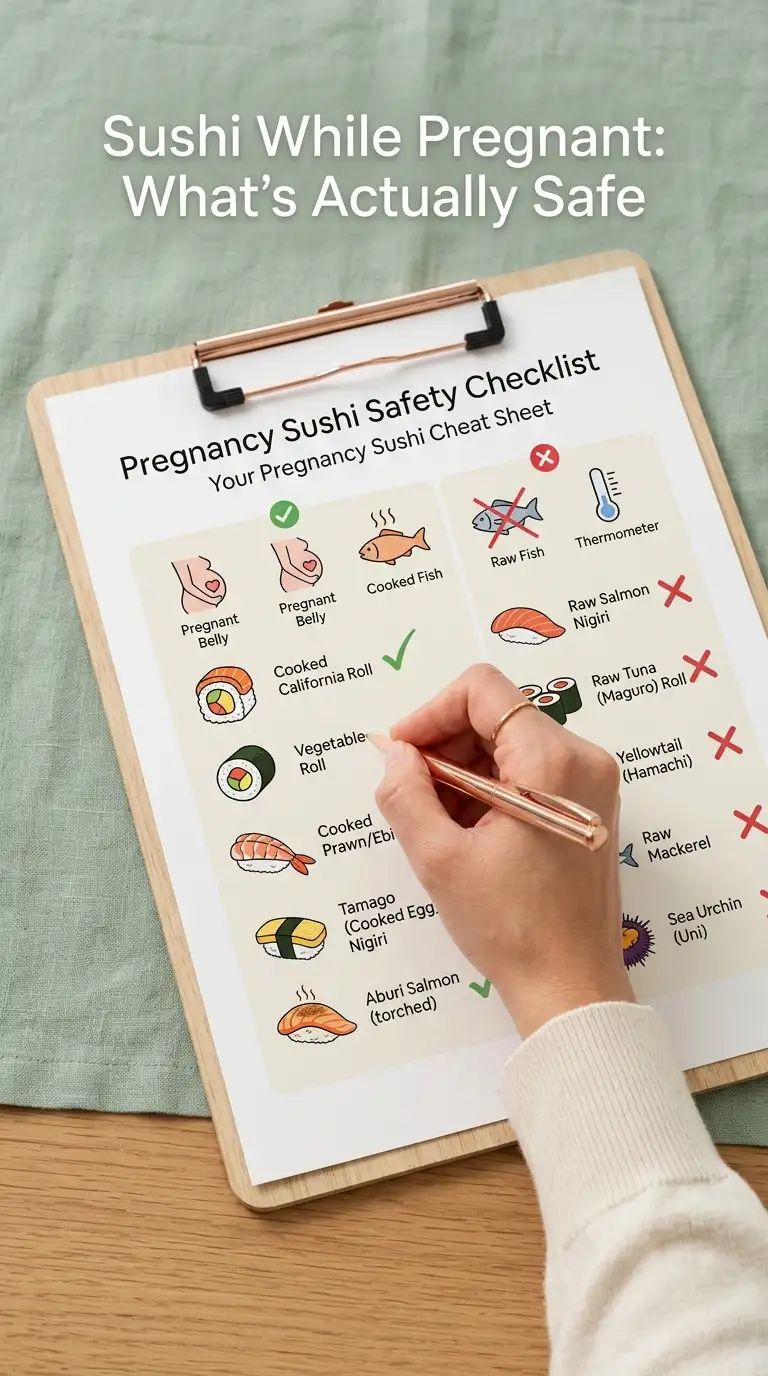
- California Rolls: Traditionally made with imitation crab (surimi), which is fully cooked. Just ensure the restaurant uses pasteurized ingredients and avoids cross-contamination.
- Shrimp Tempura Rolls: The shrimp is deep-fried, making it completely safe.
- Eel (Unagi) and Salmon (Aburi) Rolls: Eel is always served cooked. “Aburi” means seared, so if the salmon is fully cooked through, it is safe.
- Spider Rolls: Made with soft-shell crab, which is deep-fried.
- Vegetable Rolls: Cucumber (Kappa maki), avocado, and asparagus rolls are excellent, safe choices. Ensure the vegetables are freshly washed.
- Tamagoyaki: Sweet, cooked Japanese omelet rolls. Just ensure the eggs are fully cooked, not runny.
Unsafe Sushi and Fish to Avoid
When navigating the menu, avoid any roll containing the following if you are wondering about pregnant sushi safety:
1. Raw Fish and Shellfish
- Tuna (unless fully cooked), salmon, yellowtail (hamachi), snapper, and mackerel.
- Raw oysters, clams, scallops, and shrimp.
2. High-Mercury Fish (Even if Cooked)
The FDA and EPA advise pregnant women to completely avoid the following high-mercury fish, regardless of whether they are cooked or raw:
- Shark
- Swordfish
- King Mackerel
- Tilefish (from the Gulf of Mexico)
- Bigeye Tuna (often used in high-end sushi)
- Marlin
- Orange Roughy
Delicious Raw Fish Alternatives
If you are specifically craving the texture and umami flavor of raw fish, cooked fish might not satisfy you. Navigating pregnancy and sushi cravings means getting creative. Here are some pregnancy-safe alternatives that mimic the experience:
- Marinated King Oyster Mushrooms: When sliced into “scallops” or “tuna” cubes and marinated in soy sauce, sesame oil, and a touch of seaweed, king oyster mushrooms provide a remarkably similar chewy, umami texture to raw fish.
- Roasted Beet “Tartare”: Finely diced, roasted beets marinated in citrus and soy can mimic the color, earthiness, and texture of a spicy tuna tartare.
- Extra Creamy Avocado: If you miss the melt-in-your-mouth texture of fatty tuna (Toro), load up on high-quality, ripe avocado.
- Cooked “Spicy” Mayo Rolls: Use fully cooked, flaked white fish (like cod or tilapia) or cooked shrimp, mixed with a little sriracha and mayonnaise, to recreate the spicy tuna experience safely.
Tips for Eating Safely at Restaurants
Even when ordering cooked options, cross-contamination is a risk. Managing sushi and pregnancy at a restaurant requires a few extra steps to ensure your meal is safe:
- Speak to the Chef or Manager: Clearly state that you are pregnant and need to ensure your food is fully cooked and prepared without cross-contamination from raw fish.
- Avoid the Buffet: All-you-can-eat sushi buffets are a high-risk environment. Food sits at room temperature, allowing bacteria to multiply rapidly. Stick to a la carte ordering where food is made to order.
- Check the Temperature: If you order a cooked roll, ensure the fish is steaming hot. The FDA recommends cooking seafood to an internal temperature of 145°F (63°C).
- Watch the Condiments: Ensure your soy sauce is from a sealed packet or a clean dispenser. Be cautious with unpasteurized ponzu sauce or homemade mayo-based sauces.
The Bottom Line
So, can you eat it? Yes. You do not need to say goodbye to your favorite sushi restaurant. By avoiding raw fish, steering clear of high-mercury species, and being mindful of cross-contamination, you can safely satisfy your cravings.
When in doubt, always ask the restaurant staff how a specific item is prepared, and never hesitate to consult your healthcare provider for personalized advice. You have got this, mama. Now go enjoy that dinner.
References and Authoritative Sources
This article is based on guidelines established by leading global health and food safety organizations.
[1] U.S. Food and Drug Administration (FDA) and Environmental Protection Agency (EPA). (2021). Advice About Eating Fish: For People Who Are Pregnant or Breastfeeding, and Children Ages 1-11 Years.
Key Takeaway: Details the “Best Choices” (low mercury, cooked) and “Choices to Avoid” (high mercury) for pregnant women. Recommends cooking seafood to 145°F.
[2] American College of Obstetricians and Gynecologists (ACOG). (2018, reaffirmed 2023). FAQ090: Nutrition During Pregnancy.
Key Takeaway: Explicitly advises pregnant women to avoid raw or undercooked fish and shellfish due to the risk of bacterial and parasitic infections, highlighting the altered immune state of pregnancy.
[3] Centers for Disease Control and Prevention (CDC). (2023). Listeria (Listeriosis) and Pregnancy.
Key Takeaway: Explains why pregnant women are 10 times more likely to get Listeria, and how the infection can cross the placenta, causing severe complications for the fetus.
[4] U.S. Food and Drug Administration (FDA). (2020). The Scoop on Sushi-Grade Fish and Parasites in Seafood.
Key Takeaway: Clarifies that while freezing kills parasites, it does not kill harmful bacteria like Listeria or Salmonella, meaning “sushi-grade” raw fish is still a bacterial risk for immunocompromised individuals, including pregnant women.
[5] National Health Service (NHS), UK. (2022). Foods to avoid in pregnancy.
Key Takeaway: Confirms that pregnant women should avoid raw shellfish and undercooked meats, but notes that cooked cold pre-packed seafood (like cooked crab in a California roll) is safe.
Medical Disclaimer: I am a mom and a recipe developer, not a doctor. The following information is for educational purposes only and is based on guidelines from major health organizations. It does not replace professional medical advice. Always consult your OB-GYN or midwife regarding your specific dietary needs during pregnancy.